Monday, July 22, 2019

Lyman Allyn - Watercolors 2019


Discovering New Beauty: Watercolor Landscapes of the Northeast


William Trost Richards, The Rocks at Newport, Rhode Island, 1881, gouache on paper, private collection.

“I have made some new walks and discovered new beauties, and believe that I could from Newport scenery make more charming pictures than I ever dreamed of before.”
-William Trost Richards
Landscapes tell stories about place, history, and belonging, capturing the beauty of the world around us. Discovering New Beauty: Watercolor Landscapes of the Northeast examines the varying landscape of the Northeast over the last hundred or so years. Drawn largely from the Lyman Allyn’s permanent collection, this exhibition includes watercolors of the forest, fields, hills, shoreline, and sea. It also explores the built environment, with urban and suburban scenes that reflect on changing demographics. The exhibition looks at watercolor as a medium, exploring different artists’ techniques and considering how the quick-drying pigments are useful for artists working outdoors.
    
Left: Bancel LaFarge, Cornstalks, 1933, watercolor on paper. Lyman Allyn Art Museum, gift of Mrs. Bancel LaFarge, 1943.462; Right:  William Louis Sonntag, Sr.,Rocks and Mountains, ca. 1880s, watercolor on paper. Lyman Allyn Art Museum, gift of Frederick A. Moore, 1956.82.


       I saw this exhibition announced and put it on my calendar.  On the spur on the moment, I called Sandra, a painting friend and invited her to join me.  It turned out to be an absolutely wonderful show.  We had the museum almost to ourselves so we could examine each painting, discuss  how it might have been painted and what we learned from looking at the work.  It was a delightful morning.  When it was over we went outside to the museum picnic table to eat apples, raisins and crackers.  

Clearly, I will be a more regular visitor to the Lyman Allyn Museum.


National Gallery of Canada and Gauguin July 2019


One winter Sunday morning Harriet in our separate location read in the Art Daily that there would a first exhibition of Gauguin portraits at the National Gallery of Canada come summer.  She emailed and I called and we thought this would be an excellent exhibition to see.  During the spring we decided that it would make sense to combine it with a trip to Saratoga to see the New York City Ballet at the SPAC.  Plans were made and reservations made.

We checked into he Gideon Putnam on July 16 and headed out to the National Museum of Dance a pleasant walk down the Avenue of the Pines.


The main exhibit DANCERS in FILM was a collection of American and international version of Hollywood film posters where dance was prominently featured.  The posted dated from 1918 to the 1980.  It was fund to see the posters and recall the movies and artists.  The substantial profiles of the new inductees contained interested facts, photographs and videos gave new insights into the history of dance.


I have visited the museum of numerous occasions but I think Harriet found it a good way to start our trip.

After traveling through the north county with a quick stop at Canton New York to cut cross the main campus of St. Lawrence University, we arrived at  Ottawa.  We quickly checked into The Lord Elgin and started our walking tour of Ottawa.

Thursday, December 13, 2018

Berthe Morisot and the Barnes Foundation Collection


Berthe Morisot: 
Woman Impressionist


     When I saw that there was to be a major exhibition of Berthe Morisot, Harriet and I began to consider if it was possible to get to Philadelphia.  Our first visit was to see the major water color exhibition and we had high hopes that the Morisot would be just as exciting .


Sunday, August 12, 2018

Clark Art Institute - Summer 2018


Women Artists in Paris 1850 - 1900


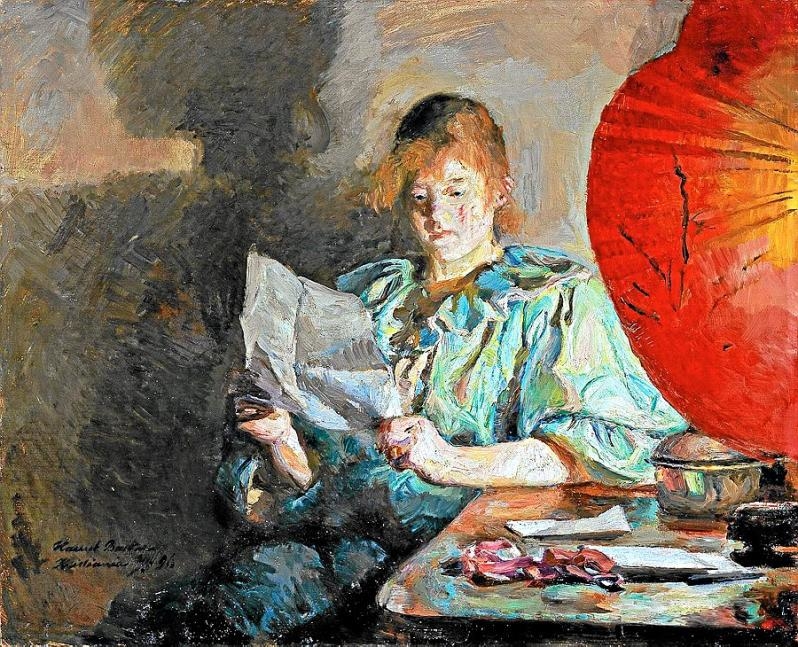
I always look forward to the Clark's summer exhibition and this year I was particularly interested in seeing the sample of Women artists who painted in Paris during the period 1850 - 1900.  Too often I visit museums and rarely see art created by women.  I always finds this frustrating. This exhibition displayed the art of some thirty-three women artists.  These women come from America, Scandinavia, Germany, Switzerland, French and Russia.  Art history documents that women were not allowed to attend most of the prestigious public art school in Paris and were denied many of the professional opportunities available for men.  A situation that seems to still exists to some degree.

However, these talented women did not give up, they found ways to learn and practice their art.  As this exhibition clearly documents, women did paint and painted well in face of societal resistance.  It simply made me proud to walk into the special galleries of the Clark Museum to spend time with these women and their art.

Marie Bashkirtseff - In the Studio, 1881

The exhibit was divided into several categories which also made by realize the tracts that these women were directed. The theme include: The Art of Painting, Lives of Women, La Toilette, Picturing Childhood, Jeunes Filles.  Within each categories, there were a variety of styles.  To me the categories are somewhat arbitrary, so I decided to just share some of my favorite painting.  This is more difficult than it sounds because there are so many great pictures to select from.


Anna Elizabeth lumps, Rosa Bonheur, 1898
Edma Pontillon, Portrait of Berthe Morisot, 1865
Amelie Beauty-Saurel, Dan Le Bleu, 1894

Harriet Backer, Evening, Interior, 1890
Cecilia Beaux, Ernesta,1894

Elizabeth Nourse, A Mother, 1888
Cecilia Beaux, Last Days of Childhood


Eva Gonzales, Beach of Dieppe, 1871-72
Fanny Churberg, Waterfall, 1877
Anna Bilinska, Unter Den Linden in Berlin, 1890
Virginie Demon-Breto, The Tomented
Ellen Thesleff, Echo, 1891

Emma Lowstadt-Chadwick, Beach Parasol, Brittany, 1880


Saturday, August 4, 2018

Sunday, July 15, 2018

The Norman Rockwell Museum

Keepers of the Flame:  Parrish, Wyeth, Rockwell and the Narrative Tradition


On a a beautiful July day, June and I headed off the the Berkshires to see the latest exhibition at the Norman Rockwell museum.  It was an easy drive and with arrive without difficulty.  While the parking lot seemed only have full, the museum was buzzing.  The exhibition divided over four galleries.  Each gallery was dedicated to one artist and the teachers who have influenced him.  It was an interesting lesson in art history, although I must admit I only recognized a few of the more famous American teachers.


This is the picture that made me want to go to see the exhibition, not to mention I thought it would be fun to take a drive to the Berkshires.  However, it was Parrish's Solitude that made the trip all worthwhile.


Solitude is simply amazing - once could stare at it for a long time wondering how it was painted.  While the exhibition said that Parrish is best known for his fantasy illustrations, I thought this landscape was just wonderful.  I will have to learn more about his landscape works.


The website describes the exhibition in the following terms:  "Narrative realism in picturemaking has been a constant—not just through eight hundred years of Western art, but through the entire history of humanity’s creative efforts, from the earliest cave paintings and frescos on the walls of ancient Egyptian tombs to today’s published imagery for print, animation, and gaming. With irrefutable evidence on display, Keepers of the Flame: Parrish, Wyeth, Rockwell and the Narrative Tradition, opening on June 9, will shed light on the unbreakable thread connecting American illustration and legendary artists Maxfield Parrish, N.C. Wyeth, and Norman Rockwell to the roots of European painting through the long line of teachers, who have, through the centuries, passed along the wisdom, knowledge, and techniques of the ages to the next generation of creators.

At the heart of this exhibition are Parrish’s lush fantasies, set in the timeless fairytale landscapes of his imaginings; Wyeth’s exuberant compositions and unforgettable characters, which breathe life into classic literature; and Rockwell’s humanistic portrayals, filled with humor and insights, for the nation’s most popular publications. 
Curated by Dennis Nolan, an award-winning illustrator and professor of art at Hartford Art School, University of Hartford, the exhibition featuring more than 85 works by American and European masters spans five hundred years, tracing the student to teacher lineage of three Golden Age illustrators to their artistic forbearers in the Italian Renaissance. Paintings intended for a broad clientele, whether church or state, private collectors or public entities, transcend their original purpose to through the art of visual storytelling. Narrative paintings inspired by religious, mythological, allegorical, and literary sources, painted with academic precision, accuracy, and beauty, will be on view."


Sunday, July 8, 2018

Frederic Church : A Painter's Pilgrimage


On a beautiful Saturday members of the "Woodlot Lane Painting Colony" met in Hartford at the Wadsworth Atheneum to view the exhibition entitles Frederic Church: A Painter's Pilgrimage.  Originally, I was less the excited because I often feel that the large landscapes done by the Hudson Valley School are too dark with a color palette of very deep green and browns.  However, many of the painting on exhibitions were from Church's visit to the Middle East so there was also bright reflected sun.

Here is how the Atheneum website describes the exhibition:

     "Frederic Church: A Painter’s Pilgrimage is the first exhibition to bring together Church’s highly detailed compositions of sacred terrain in the Middle East and the Mediterranean. A leading painter of 19th-century America and the Hudson River School, Frederic Church (1826–1900) was born in Hartford, Connecticut and had deep ties to the Wadsworth Atheneum, which maintains significant holdings of his early landscapes. The museum’s founder, Daniel Wadsworth, arranged for Church’s apprenticeship with painter Thomas Cole, the father of the Hudson River School.
     From the mid-1850s until the early 1870s, Church was the most popular, most written about, and the most financially successful painter in the United States. A specialist in landscape, he traveled to remote places to sketch majestic scenes unfamiliar to his American audience that he could turn into dramatic, large-scale paintings. Frederic Church: A Painter’s Pilgrimage explores an artist’s journey to the other side of the world—not only to paint historical and biblical sites, but to also discover his faith and broaden his worldview."

Along side the large oil landscapes there were also some very handsome sketches.
I wish this picture cam out better as it is one of my favorites.  I suspect I like it so much because of the colors.